

In summary, reserving early can give you the best choice of plots, layouts, and locations within a development. It can also help you fix the price sooner and plan your budget with more confidence.
On top of that, brand-new homes are most of the time more energy efficient, come with modern finishes and include warranties that can offer extra peace of mind.
In this guide, we look at the key benefits of buying off plan and what to keep in mind before you commit.
1) First pick of plots, floors, and parking
First off, one of the biggest advantages of buying off plan is getting in early enough to have more choice.
Instead of picking from whatever is left once homes are finished or nearly sold out, you may be able to choose the plot, floor level, and position in the development that suits you best.
This could mean a quieter spot away from the road, a preferred view, more natural light or easier access to shared outdoor space.
Reserving early can also improve your chances of securing practical features that matter day to day, such as an allocated parking space, a preferred layout or a particular part of the building.
In Shared Ownership developments, availability will always depend on the development.
Be sure to ask questions at the reservation stage can help you understand exactly what comes with your home and whether your preferred options are still available.
2) Fix the price early (and plan your budget with more certainty)
Another reason many buyers choose to buy off plan is the opportunity to agree a price earlier in the process.
If you reserve before the home is finished, you are usually working from an agreed purchase price rather than waiting to see what a similar home might be marketed for later on.
That can make the next steps feel more manageable, especially if you are trying to organise your finances around a future move.
Knowing the agreed price of the home earlier can make it easier to work out your likely deposit, compare affordability and understand what feels realistic before completion.
That said, price certainty does not mean every cost is fixed. Mortgage rates can change, and you should still check reservation fees, legal fees, valuation costs, rent levels and service charges so you have a full picture of what you will pay.
It is also worth asking exactly what is included in the specification, whether any offers apply, and when key payments will be due.
The more clearly you understand the purchase price and the costs linked to your share, the easier it is to plan with confidence while you wait for your new home to be completed.
3) Potential for value growth between reservation and completion
When you buy off plan, most of the time there’s a gap between the point you reserve the home and the point you complete and move in.
During that time the local property market can change. If prices rise while the development is being built, the home you agreed to buy earlier may be worth more by completion than it was when you first reserved it.
That potential uplift is one reason some buyers see buying off plan as attractive.
If the market value at completion is higher than the agreed purchase price, you may benefit from that difference straight away.
For Shared Ownership buyers, that can feel like a useful head start, because you secured your share based on an earlier price rather than a later one.
However, it is important to treat this as a possibility rather than a promise. Property values can stay flat or fall as well as rise, and market conditions may look different by the time your home is ready.

4) A brand new, more energy efficient home (lower running costs)
Another benefit of buying off plan is that you are moving into a brand-new home built to modern standards.
In many cases, that means better insulation, high-performance windows, more efficient heating systems and improved ventilation compared with older properties.
All of that can help the home retain heat more effectively and reduce the amount of energy needed to keep it comfortable through the year.
For Shared Ownership buyers, lower running costs can make a meaningful difference to overall affordability.
As well as your mortgage, rent and service charge, you will also need to cover everyday household bills, so an energy-efficient home may help keep monthly outgoings more manageable.
Industry research in the UK shows that most new-build homes achieve an EPC rating of A or B and can be cheaper to run than many older homes, which is one reason energy efficiency is often seen as a key advantage of buying new.
That said, exact savings will vary from home to home. Be sure to check the Energy Performance Certificate, the heating system, glazing, insulation and any included appliances before you reserve.
5) New build protections and warranties for extra peace of mind
New build homes can give buyers added peace of mind, especially when purchasing off plan. Unlike older properties, most will be built to modern standards and come with a range of protections designed to catch and resolve issues early.
Before handover, homes usually go through inspections and a snagging process, where any minor defects can be identified and put right ahead of move-in.
At Peabody, this forms part of the quality checks carried out before you receive your keys.
New build Shared Ownership homes are also supported by a defects liability period, typically lasting around two years from when the home is completed. During this time, the developer is responsible for resolving eligible defects that arise in the property.
In addition to the two-year developer warranty, Peabody homes are also covered by an extended structural warranty. This is usually provided by a recognised provider such as NHBC or BLP and offers longer-term reassurance, up to 10 years, covering more serious structural issues that may arise after the initial defects period.
In practice, this means the developer is responsible for putting right eligible defects in the early years, while the longer-term warranty provides cover for more serious structural issues.

Browse all our available homes on our Find a Home page
You can browse all Shared Ownership homes currently available on our Find a Home page.
With Peabody, you’ll benefit from high-quality homes in great areas of London and beyond, plus the flexibility to increase your share over time as your circumstances change.
FAQs about buying off plan through Shared Ownership
Buying off plan means reserving a Shared Ownership home before it has been fully built, or sometimes before construction has finished.
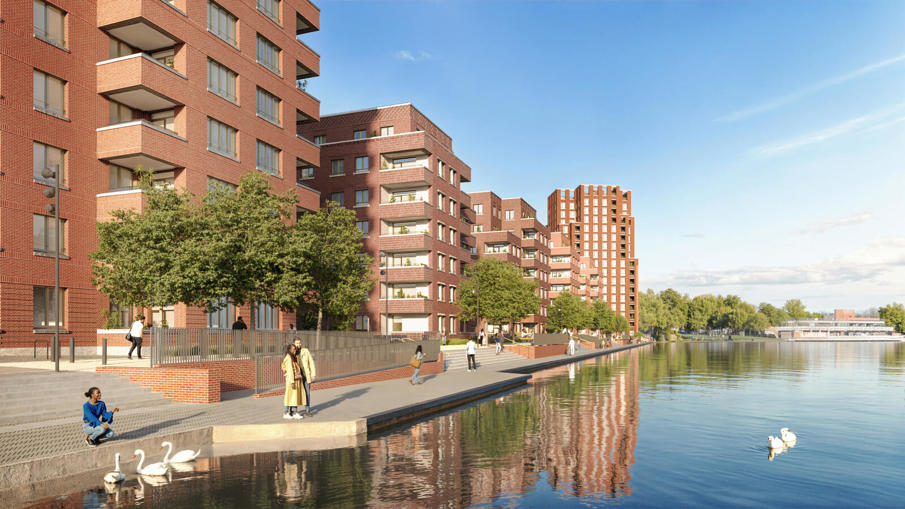
Instead of viewing the completed property, you are usually making your decision based on floorplans, specifications, CGIs, a brochure and sometimes a show home.
You still buy a share of the home and pay rent on the remaining share.
Not always, but it can be. Some buyers secure a home at an earlier price point, and there may be incentives available depending on the development.
If the market rises before completion, the home may also be worth more by the time you move in.
However, that is not guaranteed and you still need to budget for your deposit, mortgage costs, rent on the unsold share, service charges, legal fees and any other purchase costs.
Often, no. When you buy off plan, the exact home may still be under construction or not yet ready to view.
Instead, you may be shown a show home, floorplans, specification details and CGI images to help you understand what to expect.
With Peabody Shared Ownership homes, buyers may be invited to view in person or virtually once the show home is ready, but availability will depend on the development and build stage.
Before you reserve, it is worth asking a few practical questions so you understand exactly what you are buying, what it will cost and what to expect between reservation and completion:
- What is included in the specification for my plot?
- What is the estimated completion date, and what happens if it changes?
- What are the reservation fee, legal costs and likely monthly costs?
- Can I choose any finishes, upgrades, parking or storage options?
- What is the EPC rating, and how energy efficient is the home likely to be?
- What defects period and structural warranty will apply after handover?
- For Shared Ownership, what share can I buy, what rent will I pay on the rest, and what affordability checks do I need to pass?