
That’s where Shared Ownership can offer a different route. Instead of buying a home outright, you buy a share of a property and pay rent on the remaining share.
It means the deposit and mortgage you need are based on the share you buy, not the full market value of the home.
For private renters who are ready to think beyond renting, Shared Ownership can be a way to put down roots, start building equity, and move into a new home sooner than they thought.
Our recent webinar on Shared Ownership at KEWB offers a clear introduction to Shared Ownership and how it can help you step onto the property ladder.
Peabody regularly runs webinars for prospective buyers, helping people explore their options, understand the buying process, and decide whether Shared Ownership could be right for them.
This session brings together expert insight from Andrew, a Peabody Sales Manager, mortgage guidance from Alex, an IFA at Arrange My Mortgage, and a real buyer perspective from Osman, a Peabody homeowner at City Angel, giving renters a practical view of how Shared Ownership works in practice.
What is Shared Ownership?
Shared Ownership is a government-backed scheme that helps people buy a home when they cannot afford the deposit and mortgage payments for a property that meets their needs on the open market. You buy a share of the home and pay rent to the housing provider on the rest.
In many cases, you can buy an initial share between 25% and 75% of the home’s value.
Because you are only buying part of the home at first, the deposit you need for Shared Ownership is usually significantly lower than it would be if you were buying the property outright.
Is Shared Ownership better than renting?
Whether Shared Ownership is better than renting depends on your own circumstances and what you want from your next home.
Renting can offer short term flexibility, but your monthly payments do not go towards owning part of the property.
With Shared Ownership, part of your monthly cost goes towards a mortgage on the share you own, while you pay rent on the remaining share.
That can make Shared Ownership a stronger option if you want more long-term security and a chance to build up equity over time.
You also have the option to buy more shares in the future, which is a process called Staircasing. As you buy more of your home, the rent you pay on the remaining share usually goes down.
However, it’s important to look at the full monthly cost before deciding.
Alongside your mortgage and rent, you will need to pay service charges and other costs set out in your lease.
How does a Shared Ownership mortgage work?
A Shared Ownership mortgage works in a similar way to a standard mortgage, but it only covers the share of the home you are buying.
For example, if you buy a 25% share, your mortgage is based on that 25% share rather than the full value of the property.
You will still need to apply through a lender, pass affordability checks and make sure the monthly repayments work for your budget.
We recommend speaking to a mortgage adviser if you're thinking about applying, as the amount you can borrow will depend on your income, deposit, credit history and regular outgoings.
How much deposit do you need for Shared Ownership?
The deposit for Shared Ownership is based on the share you are buying. In many cases, buyers need a deposit of 5% to 10% of their share.
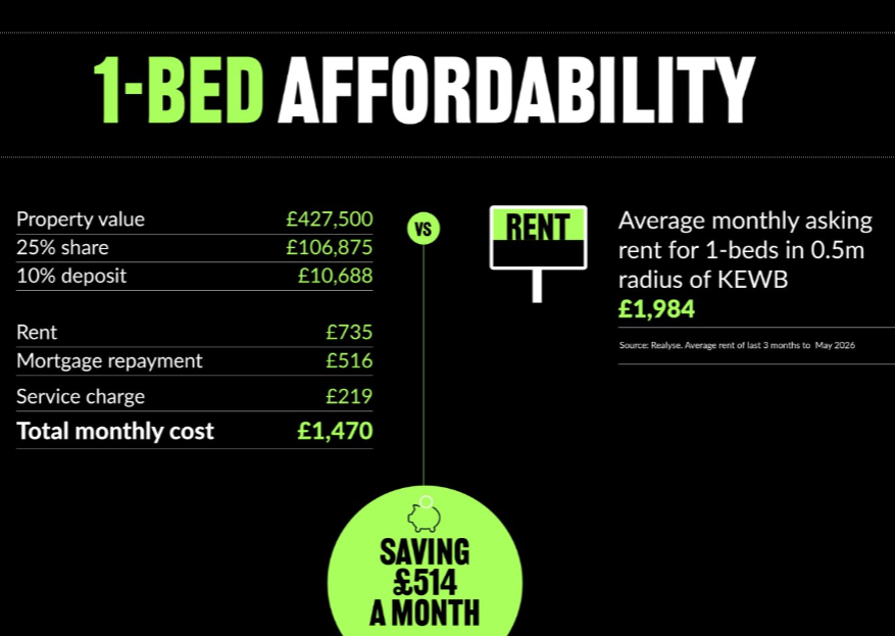
For example, if you were buying a 25% share of a £427,500 home at KEWB, your share would be worth £106,875.
A 10% deposit on that share would be £10,688.
By comparison, a 10% deposit on the full £427,500 value would be £42,750.
How much rent do you pay with Shared Ownership?
With Shared Ownership, you pay rent on the part of the home you do not own. The amount is based on the housing provider’s share of the property. For new-build Shared Ownership homes, GOV.UK says rent is limited to 3% of the value of the share owned by the housing provider, with most providers charging 2.75%.
Using the earlier example of a £427,500 home, if you owned 25%, the provider would own the remaining 75%, worth £320,625.
If rent was charged at 2.75% of that remaining share, the annual rent would be £8,817.19, or around £734.77 per month.
Your rent can be reviewed and may increase over time, so it is important to check the lease before buying.
Why KEWB could suit private renters in West London
For renters looking in West London, KEWB offers new 1 & 2-bed Shared Ownership homes in a well-connected location close to Kew Bridge station and the local high street.
From the development, central London can be reached in around 20 to 30 minutes, making it a practical option for commuters who want to stay connected without giving up local green space and riverside living.
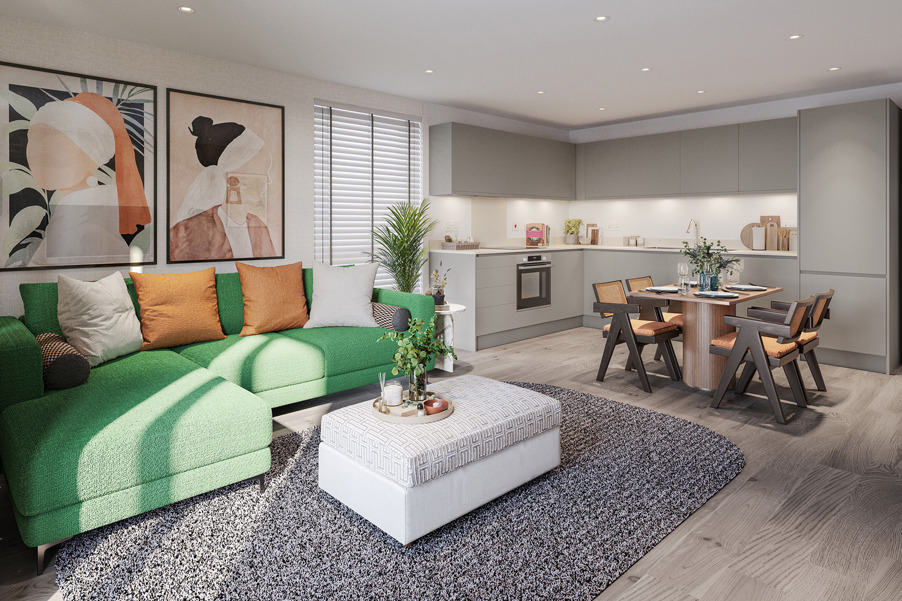
The homes are designed with modern living in mind, with open-plan kitchen and living areas, private balconies or terraces, double glazing, modern insulation and heating from a ground source heat pump.
Apartments also come with a 10-year warranty, giving buyers added reassurance when moving into a new build home.
Another standout feature is that homes include a one-year membership to Kew Gardens, helping residents make the most of one of the area’s best-loved green spaces.
What to do next if you’re thinking beyond renting
If you’re wondering whether Shared Ownership could work for you, the best place to start is by looking at your budget.
Think about how much you could afford each month, how much deposit you have saved and whether you meet the eligibility criteria for Shared Ownership.
We also highly recommend you speak to a mortgage adviser who understands Shared Ownership.
They can help you understand what you might be able to borrow and what your monthly costs could look like once mortgage repayments, rent and service charges are included.
If you’re ready for more security, want to start building equity and would like to explore buying a new home in London, you can browse our new build homes today.
Frequently asked questions about thinking beyond renting
Shared Ownership can be a god idea if you want a route into home ownership, more long-term security and the chance to build equity.
However, it depends on your budget and circumstances, as you’ll need to factor in mortgage repayments, rent, service charges and other ownership costs.
You usually need a deposit based on the share you’re buying, rather than the full value of the home.
This is often around 10% of your share.
Yes. Buying more shares is called Staircasing.
As you buy more of your home, the rent you pay on the remaining share usually reduces. You will also be able to Staircase to 100% ownership and stop paying rent altogether.
No. Shared Ownership is often used by first-time buyers, but it is also available to people who used to own a home and can no longer afford to buy one that meets their needs.
Yes, private renters can apply for Shared Ownership if they meet the eligibility criteria.
You’ll need to show that you cannot afford to buy a suitable home on the open market and that the costs are affordable for you.